
The Coromandel Express
Portrait of a Journey Between Kolkata and Chennai

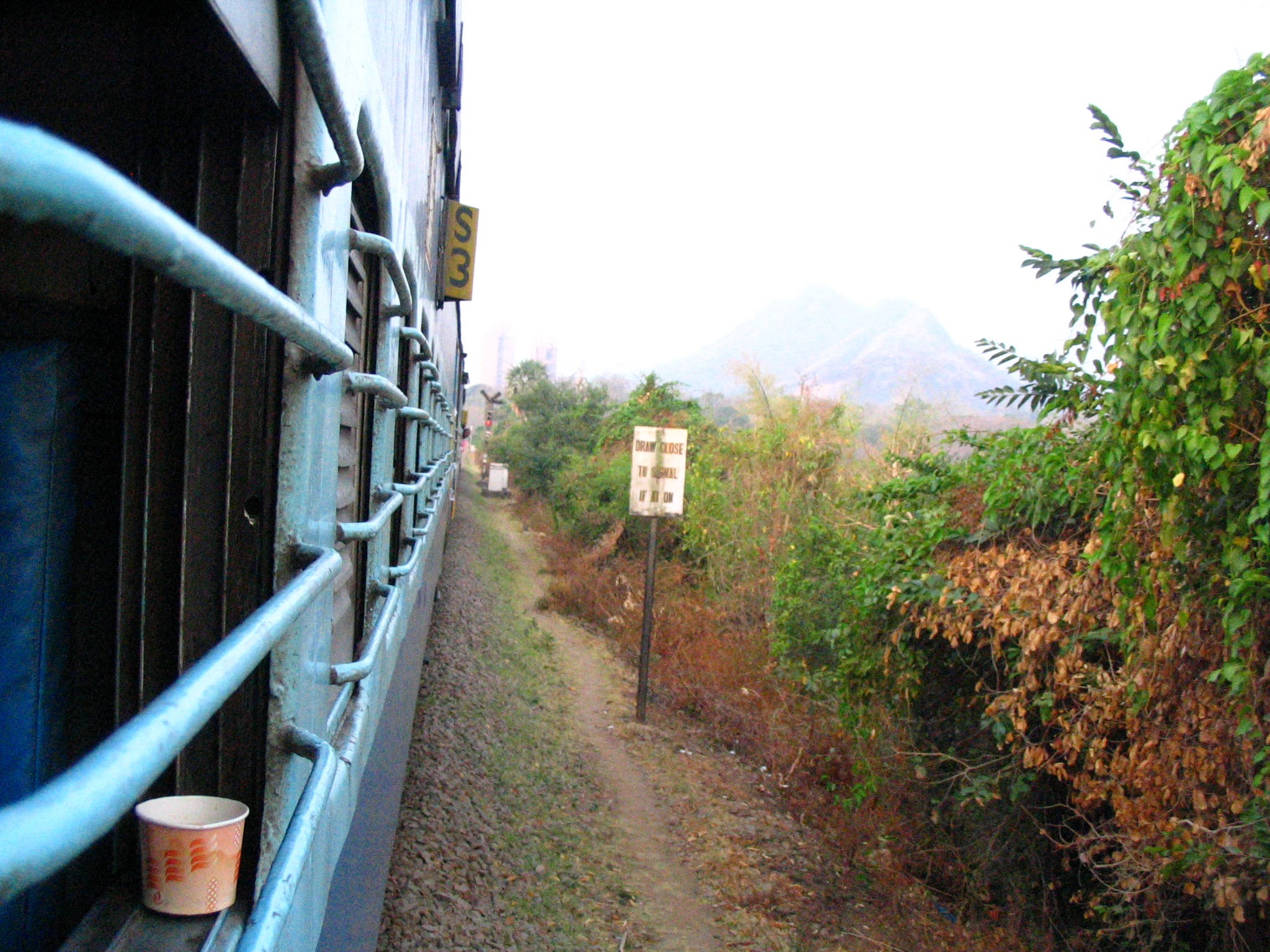
After a while, the journey ceases to be a journey.
That sounds strange, considering the distance. Kolkata to Chennai is more than a thousand miles of track, two nights and most of three days depending on the mood of the railway gods, the season, the condition of the signals, the unseen mathematics of freight trains as well as priorities and delays. Yet after making the trip enough times, the route becomes familiar in the way a river becomes familiar. One stops measuring progress. One simply enters it.
The journey begins long before departure.
It begins beneath the vast iron ribs of Howrah Station, where thousands of lives appear to be moving in every direction at once. Porters weave through the crowd with impossible towers of luggage balanced on their heads. Families occupy entire sections of platform as if preparing for a small migration. Tea sellers circulate endlessly. The station clock hangs above it all, unmoved by anyone’s urgency.
Then, eventually, there is that subtle change in atmosphere. The train is no longer something awaited. It is standing there. Real. Breathing quietly through its vents. People begin finding their coaches. Checking reservation charts. Lifting bags through narrow doorways.
And then, almost without ceremony, Kolkata begins to slide away.
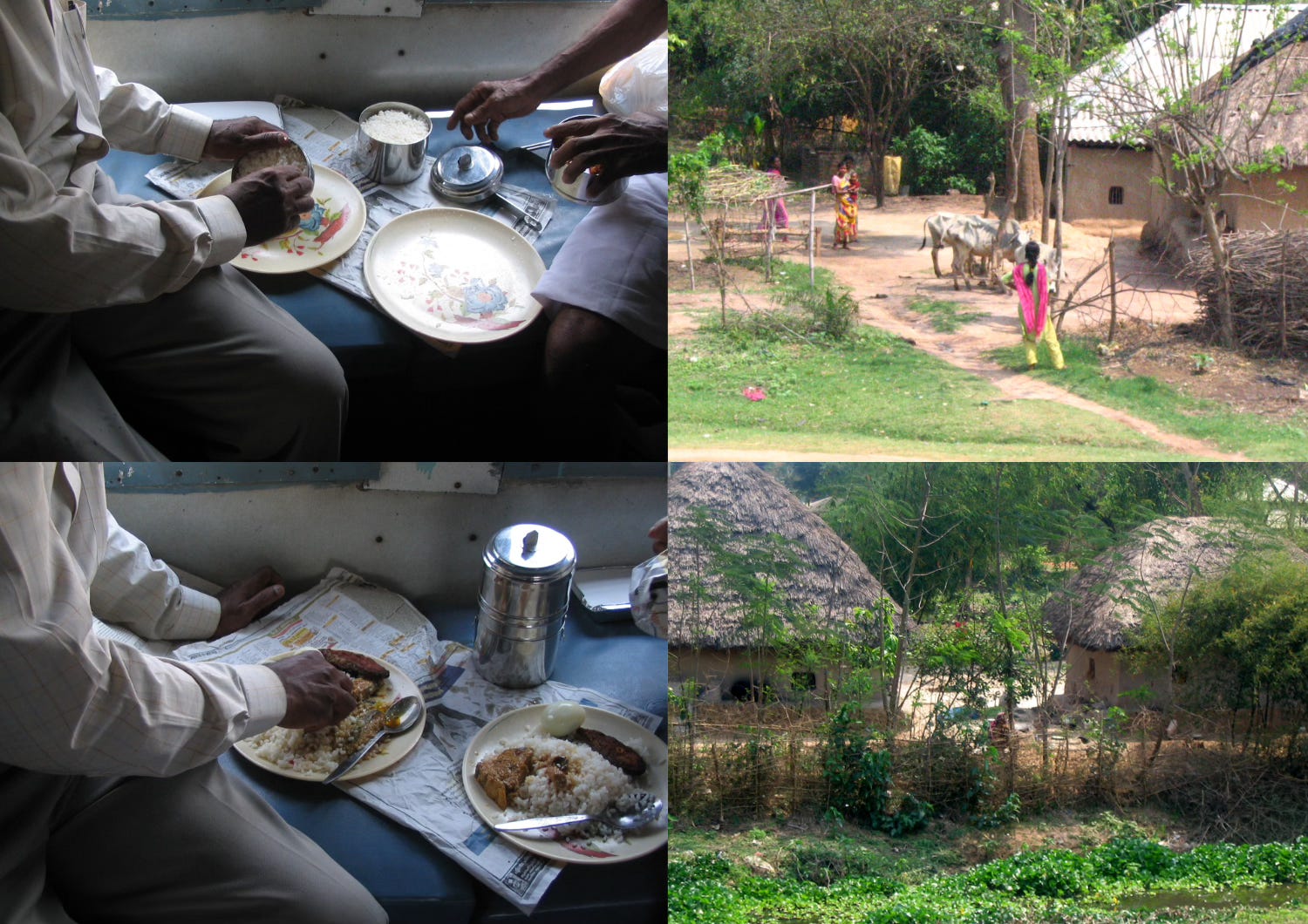
For the first hour I always watch the window.
Factories, warehouses, tangled suburbs, ponds bright with water hyacinth, clusters of houses crowded close to the tracks. The city loosens its grip slowly. Even after all these journeys I find myself looking out with the same attention, as though something important might reveal itself before the last buildings disappear.
Inside the carriage, another landscape is forming.
A sadhu settles near the doorway, wrapping his shawl around his shoulders despite the heat. Across from him a young engineer spends twenty minutes arranging chargers, cables and devices before falling asleep. A grandmother opens a steel tiffin carrier and immediately begins feeding anyone within reach. Children negotiate ownership of window seats with a seriousness usually reserved for international diplomacy.
By evening the compartment feels less like public transport and more like a temporary village.
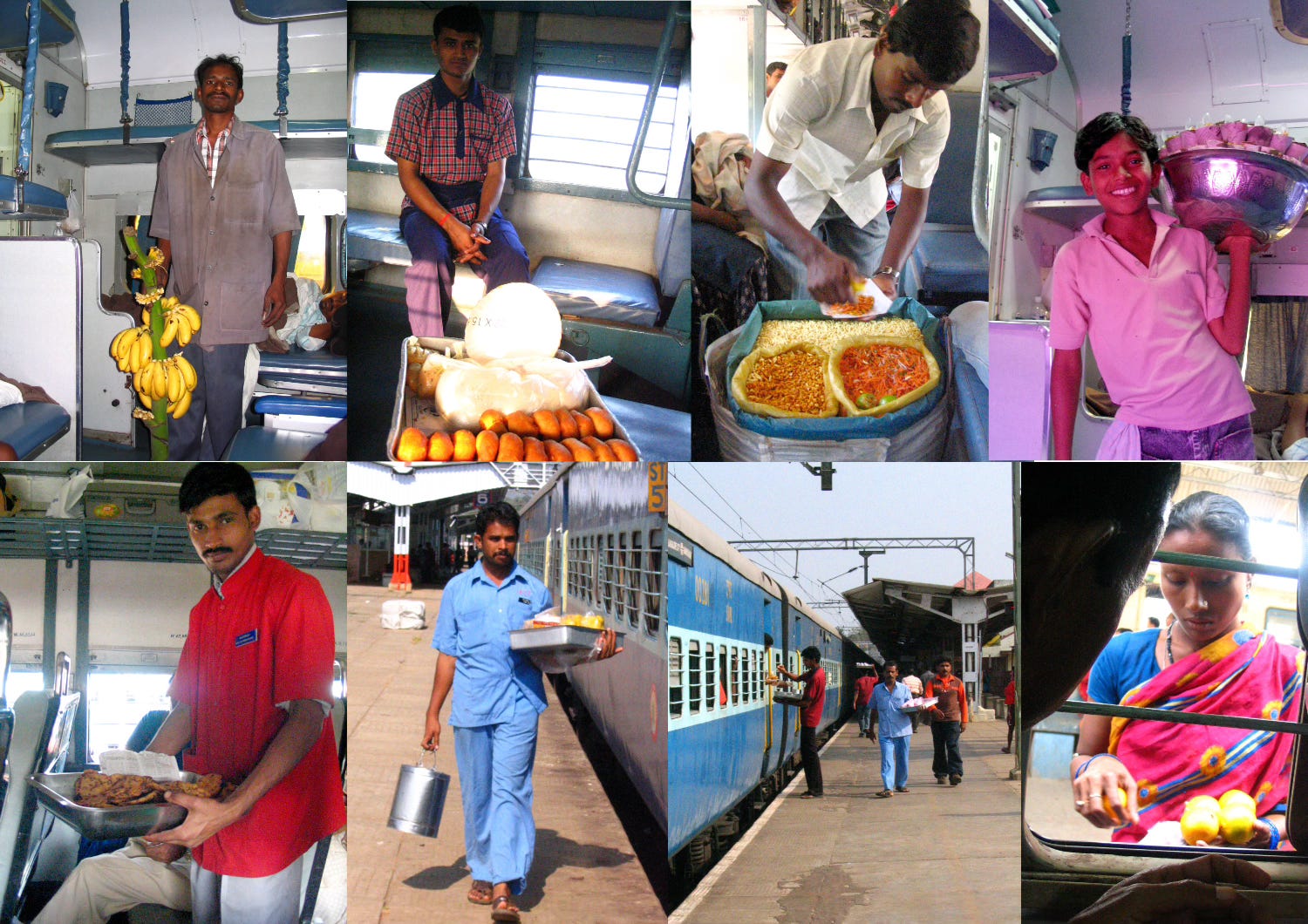
The vendors arrive in waves.
Tea.
Coffee.
Jhal muri.
Samosas.
Bottled water.
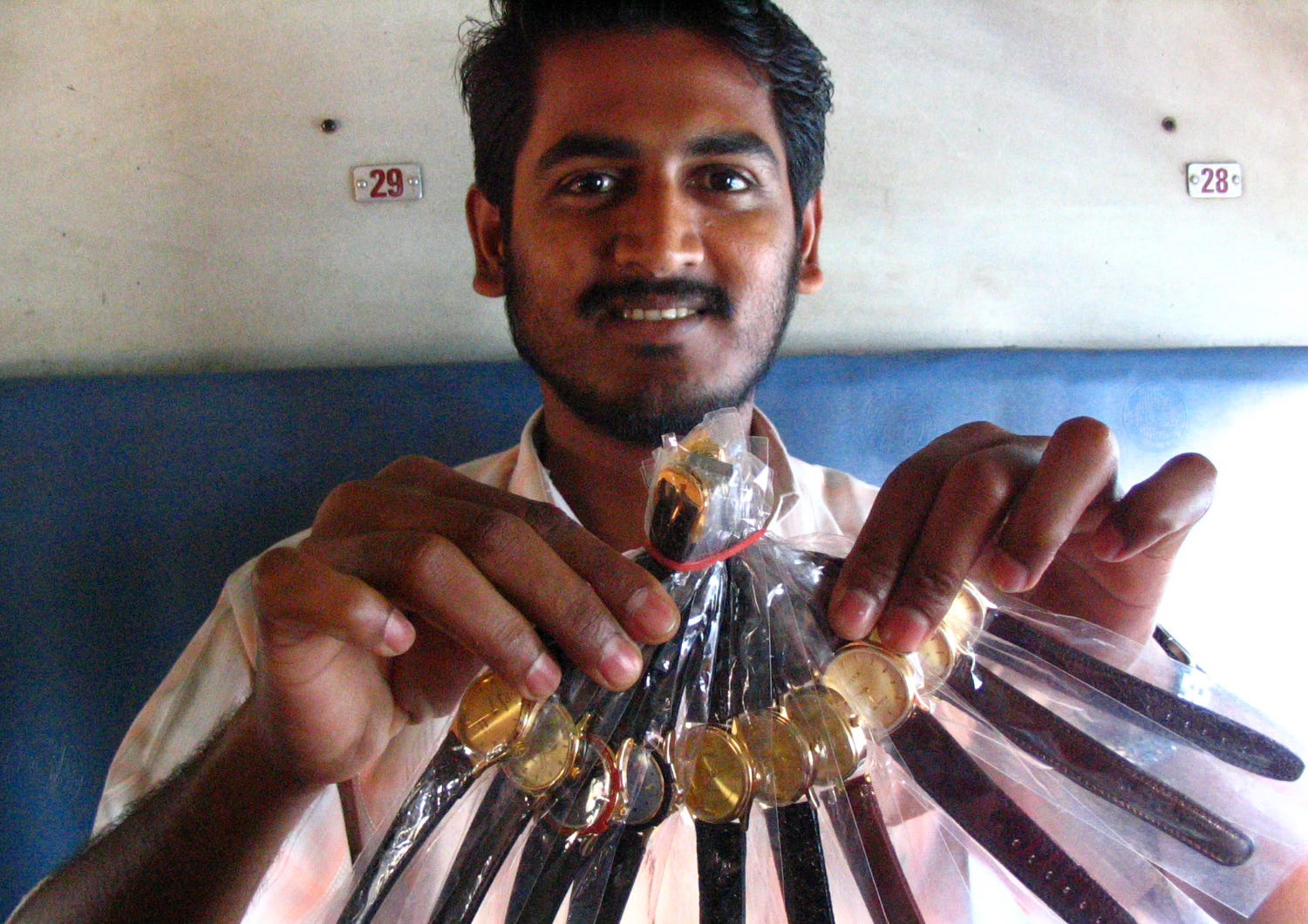
Then come the sellers of things nobody intended to buy.
Watches.
Padlocks.
Handkerchiefs.
Pens.
Playing cards.
Tiny torches.
Plastic toys.
Mobile phone chargers of uncertain origin.
One man carries enough books beneath his arm to supply a small library. Spiritual texts rest beside detective novels. Film magazines lean against engineering exam guides. Every few compartments he stops, announces his presence, and waits to see who among us wishes to become someone slightly different before reaching Chennai.
The train itself develops a rhythm.
The wheels strike the rail joints with a steady metallic pulse that slowly enters the body. Conversations drift in and out of awareness. People read. Sleep. Stare through windows. Share food. Repeat stories they have told many times before.
Hours pass almost unnoticed.
The countryside changes.
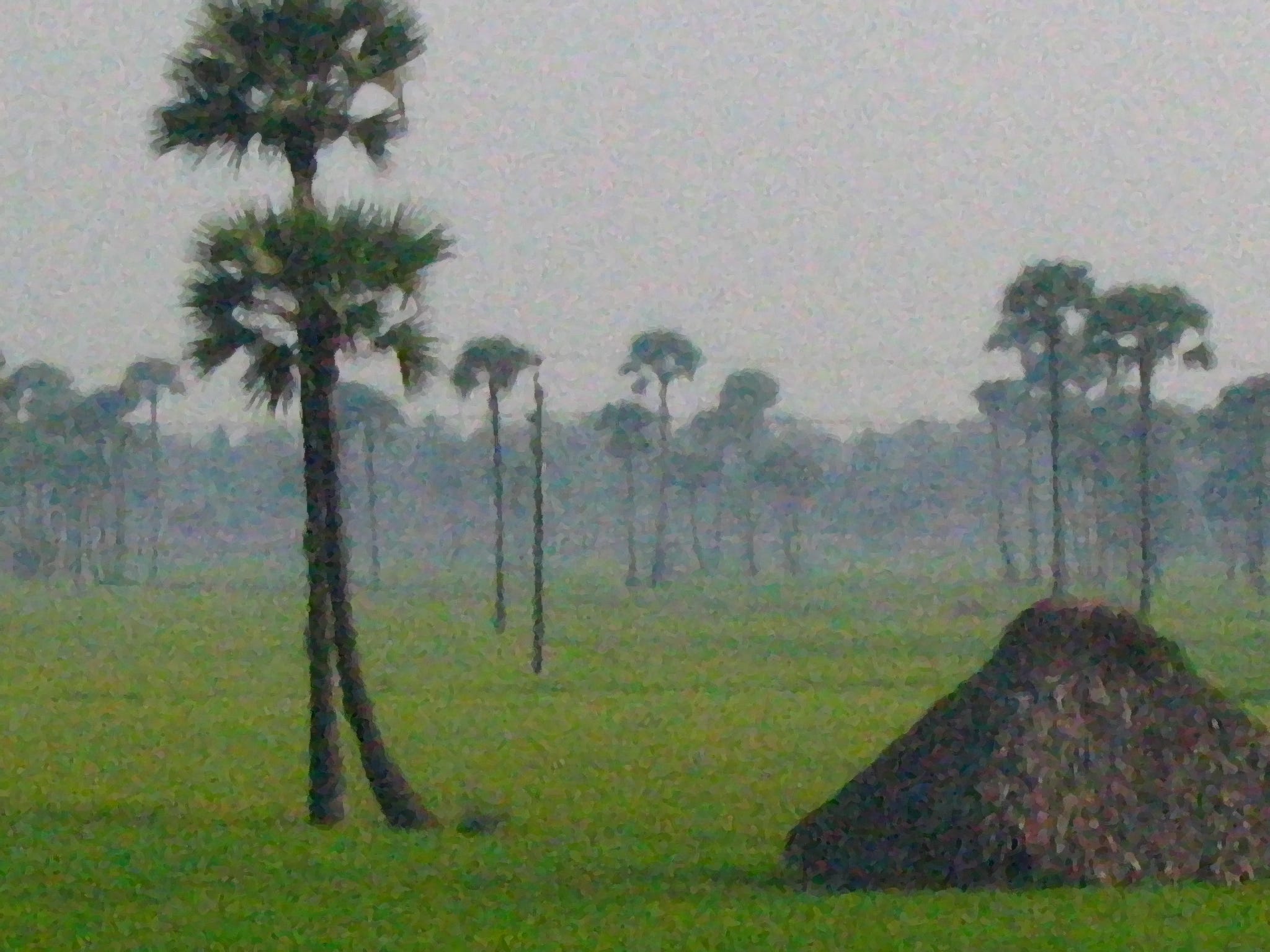
The green flatness of Bengal yields to different colours and textures. Rivers appear and vanish. Rice fields stretch towards distant horizons. Villages gather around temples, around ponds, alongside roads that seem to lead nowhere. Somewhere during the second day the signs begin changing language. The earth itself appears different. Yet the train continues forward with the same patient determination.
What I remember most, though, are the unscheduled stops.
Not stations.
Not destinations.
Simply pauses.
The train slows, shudders, and comes to rest in the middle of nowhere.
No explanation follows.
Outside there may be fields. A cluster of trees. A distant water tower. Occasionally a small settlement whose existence would remain unknown were it not for this interruption. The minutes lengthen. Passengers glance up from their books. Someone asks a neighbour what has happened. Many different answers circulate immediately.
Signal failure.
Track maintenance.
An accident further ahead.
A minister’s special train.
A herd of cattle.
An elephant.
Every possibility sounds equally plausible.
After enough journeys, curiosity fades. The train will move when it moves.
People adapt.
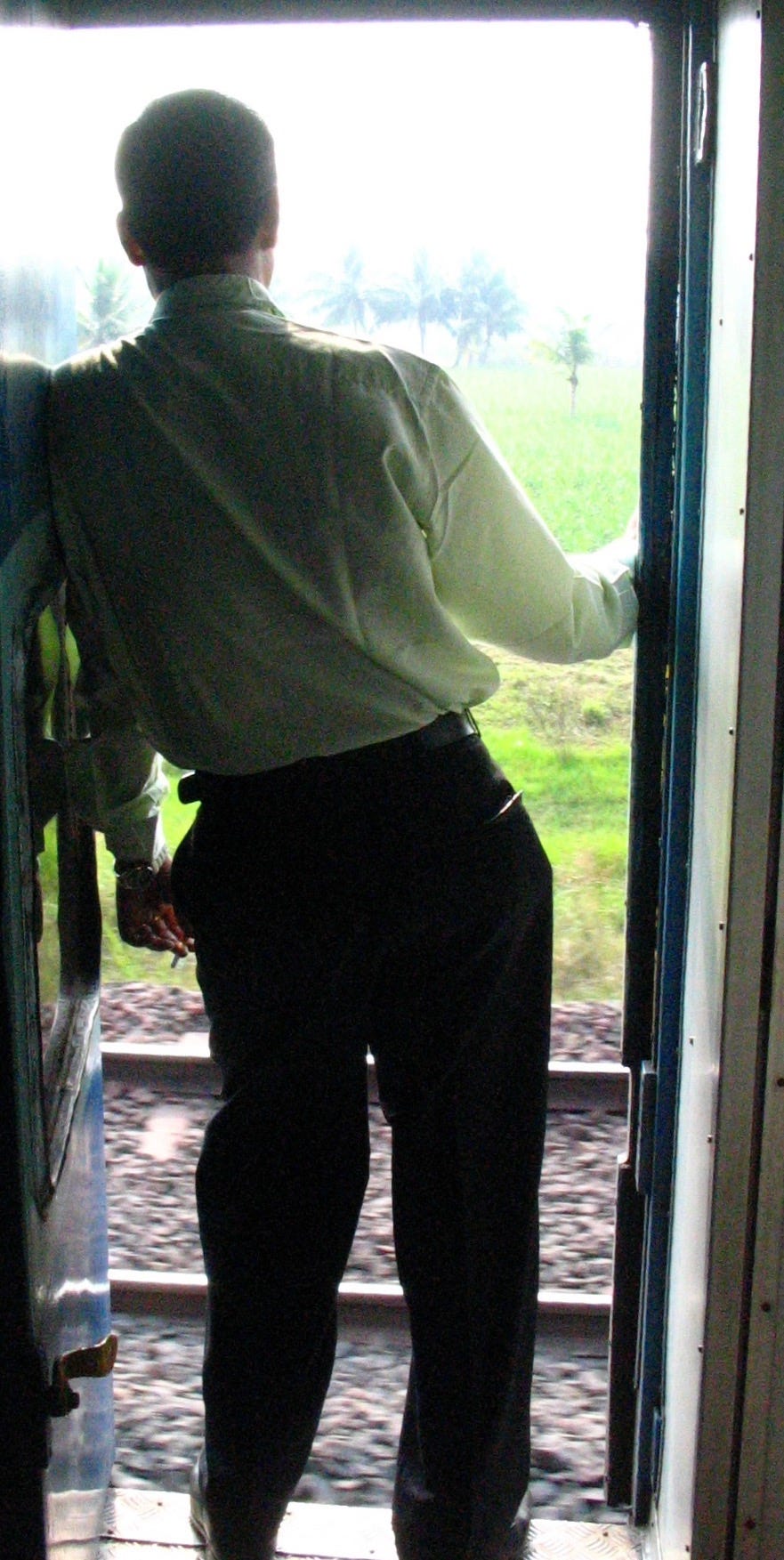
A few climb down to stretch their legs. Tea appears from somewhere. Conversations begin between strangers who might otherwise never have spoken. Children press their faces against the glass. The countryside, unnoticed while rushing past at speed, suddenly becomes visible.
I have often thought that these pauses reveal something essential about India.
Nobody planned them.
Nobody wants them.
Yet life unfolds around them anyway.
A card game begins.
Someone shares mango pickle.
A travelling salesman explains his philosophy of business.
An elderly man recalls a journey made forty years earlier.
For an hour, or two, or sometimes longer, an entire trainload of people occupies a strange territory between departure and arrival.
Then comes the signal.
A distant horn.
A vibration beneath the floor.
The wheels turn.
Conversation pauses.
The landscape begins moving once more.
By the second night the compartment has settled into an intimacy impossible to imagine on departure. People who exchanged only polite nods in Kolkata now know one another’s occupations, families, disappointments and ambitions. Children sleep across berths. Snores emerge from unexpected directions. The blue night lamps cast everyone in the same gentle light.
Morning arrives somewhere in Andhra Pradesh.
Coffee vendors replace tea vendors.
Coconut palms become more frequent.
The air feels different through the open doorway.
The train sweeper moves through the carriage collecting the evidence of two days’ habitation: crushed paper cups, biscuit wrappers, fruit peels, newspapers, forgotten receipts. His work passes largely unnoticed. Yet without him the temporary village would quickly become uninhabitable.
And then, inevitably, Chennai begins announcing itself.
Industrial estates.
Flyovers.
Apartment blocks.
Temple towers glimpsed between buildings.
Laundry hanging from balconies.
The train slows.
People reach for luggage.
Blankets disappear into bags.
Phone numbers are exchanged with promises to stay in touch. Promises that sometimes survive the journey and sometimes do not.
What always surprises me is how quickly the little community dissolves.
The family that occupied the next berth for two days vanishes into the crowd.
The student disappears.
The sadhu disappears.
The bookseller, the singer, the tea vendor, the sweeper, the old man with endless stories—all return to the wider flow of the country.
Within minutes they are gone.
Only the memory remains.
After making the journey many times, I no longer think of it as travel between two cities. The train becomes a narrow corridor through India itself. For two days and two nights, every carriage contains a small version of the country: noisy, crowded, generous, frustrating, unpredictable, endlessly alive.
The destination matters.
Yet what lingers longest is the movement between destinations.
The sound of wheels beneath the floor.
The smell of railway tea.
The cry of a vendor approaching from the next carriage.
The sight of strangers becoming neighbours.
And somewhere beyond the window, fields sliding slowly south beneath an enormous sky.

I’m so glad you’re here. Every reader helps keep this space alive. All subscribers receive the new writings from The Ethics of Tenderness—and if you choose a paid subscription, are helping this work continue, a gesture of shared care for what is tender, true, and beautiful.
If something here stirs you, feel free to share it with someone who might enjoy it too. I’d love to hear your thoughts, a line or two in the comments, or even just a quiet nod that the words reached you. Every little gesture helps this small space grow gently, and your presence matters.
What a beautiful story.
These lines resonated so deeply with me:
“The destination matters. Yet what lingers longest is the movement between destinations.”
It’s the journey itself that creates the most meaningful memories — just like in life.
That was such a lovely story, journey and passage through India Urvasi.
I loved the details in it, that made me feel like I was there on the train noticing everything you were seeing, smelling and tasting as the time moved on.
That's a journey I'd love to do and if I ever get the chance I'll be looking out for you!